

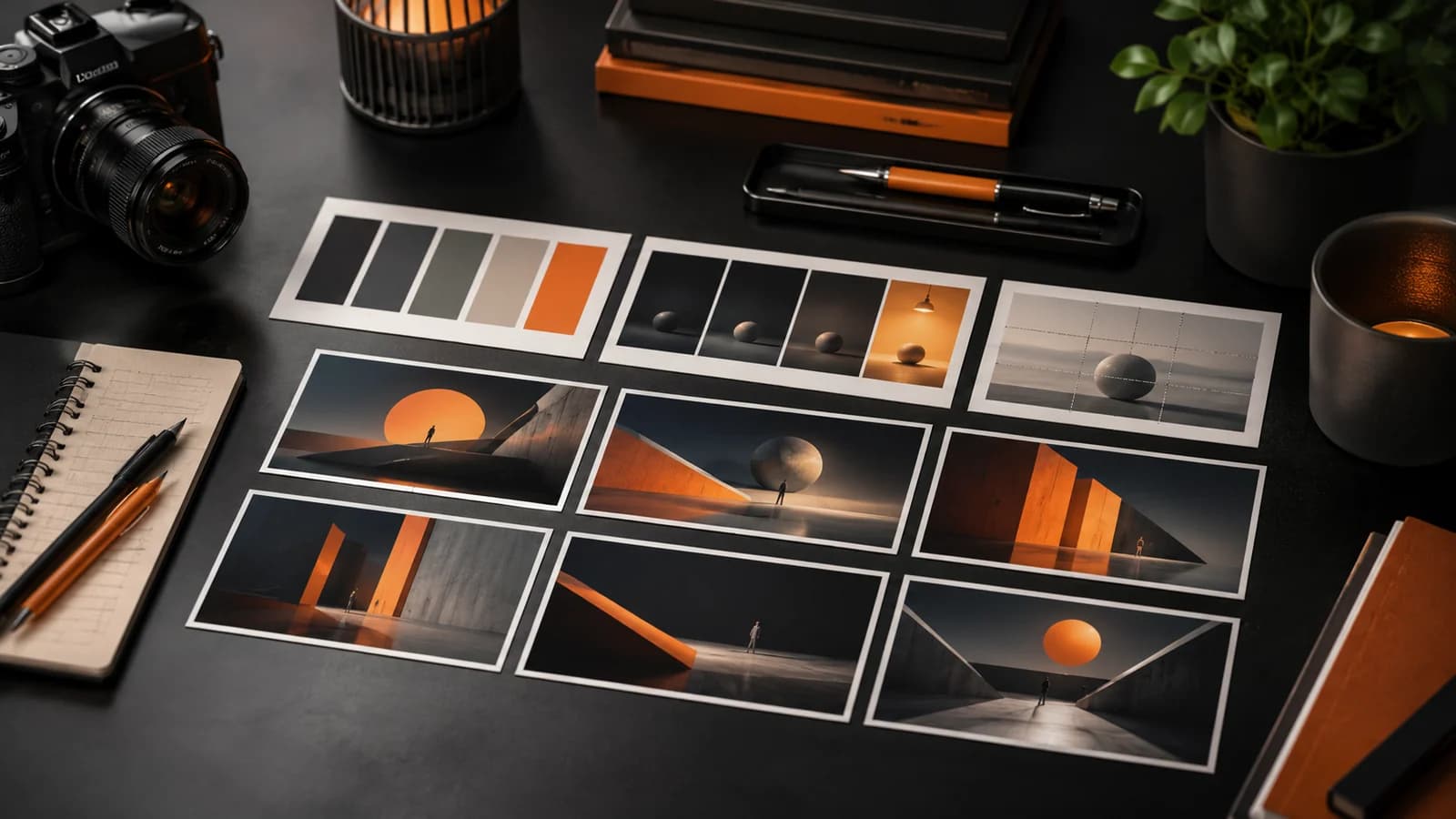
A practical guide to style cloning thumbnail for YouTube creators who need better thumbnail briefs, title alignment, and repeatable visual decisions.
style cloning thumbnail: how it works for YouTube thumbnail workflows should begin with the viewer's reason to click, not with a decorative visual style. The strongest thumbnail direction turns the video promise into one visible decision: what the viewer will learn, avoid, compare, or unlock.
For TUMB, the practical move is to write the thumbnail brief before producing final artwork. That brief connects the title hook, the visual proof, the emotional tone, and the mobile reading path.
A useful first check is this: style cloning thumbnail: how it works for YouTube thumbnail workflows If that idea cannot be seen in a small YouTube feed, the thumbnail needs to become simpler.
A clickable thumbnail needs evidence. Evidence can be a face, a product, a score, a before-after contrast, a marked interface, a recognizable object, or a scene that makes the outcome feel real.
The goal is not to show everything. The goal is to show enough that the viewer believes the video has a real answer. A practical guide to style cloning thumbnail for YouTube creators who need better thumbnail briefs, title alignment, and repeatable visual decisions.
AI can produce more variations than a team can review, so constraints matter. Reuse color rules, framing patterns, subject scale, negative space, and text limits so every output still feels like the same channel.
The best workflow is not endless generation. It is a small set of purposeful variants: one for curiosity, one for proof, one for emotion, and one for clarity.
CTR is only the first signal. If the thumbnail wins the click but breaks the viewer's expectation, retention and trust can fall. A stronger system reads click-through rate together with watch time, comments, traffic source, and topic intent.
A practical guide to style cloning thumbnail for YouTube creators who need better thumbnail briefs, title alignment, and repeatable visual decisions. Over time, each video should leave behind a small production note that improves the next brief.
Who is style cloning thumbnail: how it works for YouTube thumbnail workflows for?
This guide is for YouTube creators who want clearer thumbnail decisions, stronger title alignment, and a more repeatable packaging workflow. A practical guide to style cloning thumbnail for YouTube creators who need better thumbnail briefs, title alignment, and repeatable visual decisions.
What should I check after reading it?
Check whether the thumbnail has one visual promise, one proof point, title alignment, and a mobile-readable composition.
How does TUMB help?
TUMB turns the video idea into a structured brief, title hooks, thumbnail directions, and localized production decisions in one workflow.
What is an AI thumbnail generator?
What AI thumbnail generators do, where they help creators, and why strong prompts still need strategy and title alignment.
OpenHow to align YouTube thumbnails and titles
A practical guide to aligning YouTube thumbnails and titles through curiosity, visual proof, and viewer expectation.
OpenHow to run a YouTube thumbnail A/B test
A practical guide to YouTube thumbnail A/B testing using variants, CTR, watch time, and expectation alignment.
OpenThumbnail examples
Review how thumbnail ideas turn into visual directions across niches.
OpenFAQ
Check workflow, source image, credit, and quality control answers.
Open